We live in a world that talks endlessly about love, sings about love, markets love, and longs for love, yet we struggle to understand the love God has for us and the love He calls us to live out toward Him and toward others. That tension sits at the very heart of Advent. The Advent season and the Christmas story do not point to a transaction, manipulation, or guilt-driven exchange, but to a gift freely given. They point to a love that surpasses our ability to fully comprehend, because God is alive, God is active, and God loved us first, despite who we are.
God Did Not Wait for Us to Be Ready for Love, He Loved Us First
(MULTILINE)
Love is what unites us with our Creator. Jesus was born so that love could be seen, touched, and embodied. In Christ, love moved from an abstract idea to a lived reality. Jesus reminds us that there is no greater love than to lay down one’s life for another, and from the manger forward, His entire life moved steadily toward that ultimate expression of love.
This past week, while driving, I heard a newer song that caught my attention, Love is a Canyon by Noah Cyrus featuring Orville Peck. It made me think about how deeply our culture is saturated with songs about love. Across generations and genres, from classic rock to modern pop, from soul and R and B to contemporary worship music, we sing about love constantly. We celebrate it, chase it, fear losing it, and ache for it. And yet, for all the language we have about love, it remains something we wrestle with deeply.
We love being loved, but we struggle to love well. We long to be valued, yet we often fail to see our own worth. We wrestle with the truth that God loved us first, even while we were broken, distant, and foolish in our decisions. And yet Scripture tells us that while we were still far from Him, God sent His Son.
This is the true definition of love. It is not merely poetry, cinema, or music. True love crosses the great divide of fear and uncertainty. It moves into places that were once ignored and people who were once dismissed. The love that draws us to the manger is a love marked by awe, wonder, joy, hope, peace, and love itself, because God took the first step. God spoke the words we could never earn. I love you first.
The love Jesus embodied in our world is fearless. It does not merely lack fear; it confronts and overcomes fear. As we continue our Advent journey today, we focus on the love that Jesus brought into our world and into our lives.
Advent means coming or arrival, and it is marked by expectation, waiting, anticipation, and longing. It is not simply an extension of Christmas, but a rediscovery of it. Advent links past, present, and future. It allows us to share in the ancient longing for the Messiah, to celebrate His birth, and to remain alert for His return. Advent looks back with gratitude and looks forward with hope. And throughout this season, we have focused on the attributes revealed in the coming of Jesus: hope, peace, joy, and today, love.
Throughout Advent, we have looked closely at individuals within the Nativity story, but today I want us to widen the lens. When we look at the whole story, we discover that the birth of Christ brings together people across every imaginable divide.
We encounter Zechariah and Elizabeth alongside Mary and Joseph, the old and the young, the promises of Israel’s past and the fulfillment of God’s future. We meet shepherds and angels, earth and heaven, the physical and the spiritual. We even see creation itself gathered at the stable. And at the center of it all is Jesus, the infant who would become a boy, a man, and the leader of a revolution rooted not in power or politics, but in love.
The cast of characters God chose for the arrival of His Son was far from expected. To many it would have seemed inappropriate, even offensive. Yet through this unlikely gathering, God revealed the nature of His love. In Christ’s birth, divisions were crossed, walls were lowered, and dignity was restored. And in doing so, God showed us what love truly looks like.
Christ Embodies Love
1 John 4:7-16
We Are Not Expected to Create Love, But to Simply Live it Out
(MULTILINE)
Our Love is Seen Not By What We Accomplish and How We Feel; But By Who We Follow
(MULTILINE)
Love Defines and Drives Us
John 13:33-35
As Followers of Jesus Love is not Optional, It is Essential
(MULTILINE)
Love is the Clearest Evidence of a Life Shaped By Jesus
(MULTILINE)
Love Defines & Drives How We Live
(MULTILINE)
Love Develops Courage in Our Lives
Matthew 5:43-44; Luke 10:30-35; 1 John 4:17-18
Fear Builds a Wall While Love Builds a Bridge
(MULTILINE)
This is why Jesus’s teaching was so radical. This is why God’s love is so disruptive. Jesus did not merely speak about love in theory. He spoke directly into systems of fear and division. He told His followers to love their enemies and to pray for those who persecuted them. That kind of love requires courage.
Love Gives Us Courage to Cross the Divide
(MULTILINE)
Jesus’s love is fearless love. It forms courage within us. It gives us the strength to cross borders, to lower defenses, and to reach toward those we would otherwise avoid. Courageous love may not begin on a global scale. It may begin in your family, in your home, in your neighborhood, or in your workplace. At Christmas and always, Jesus calls us into His loving presence and invites us to make room for others, not because they deserve it, but because love always goes first.
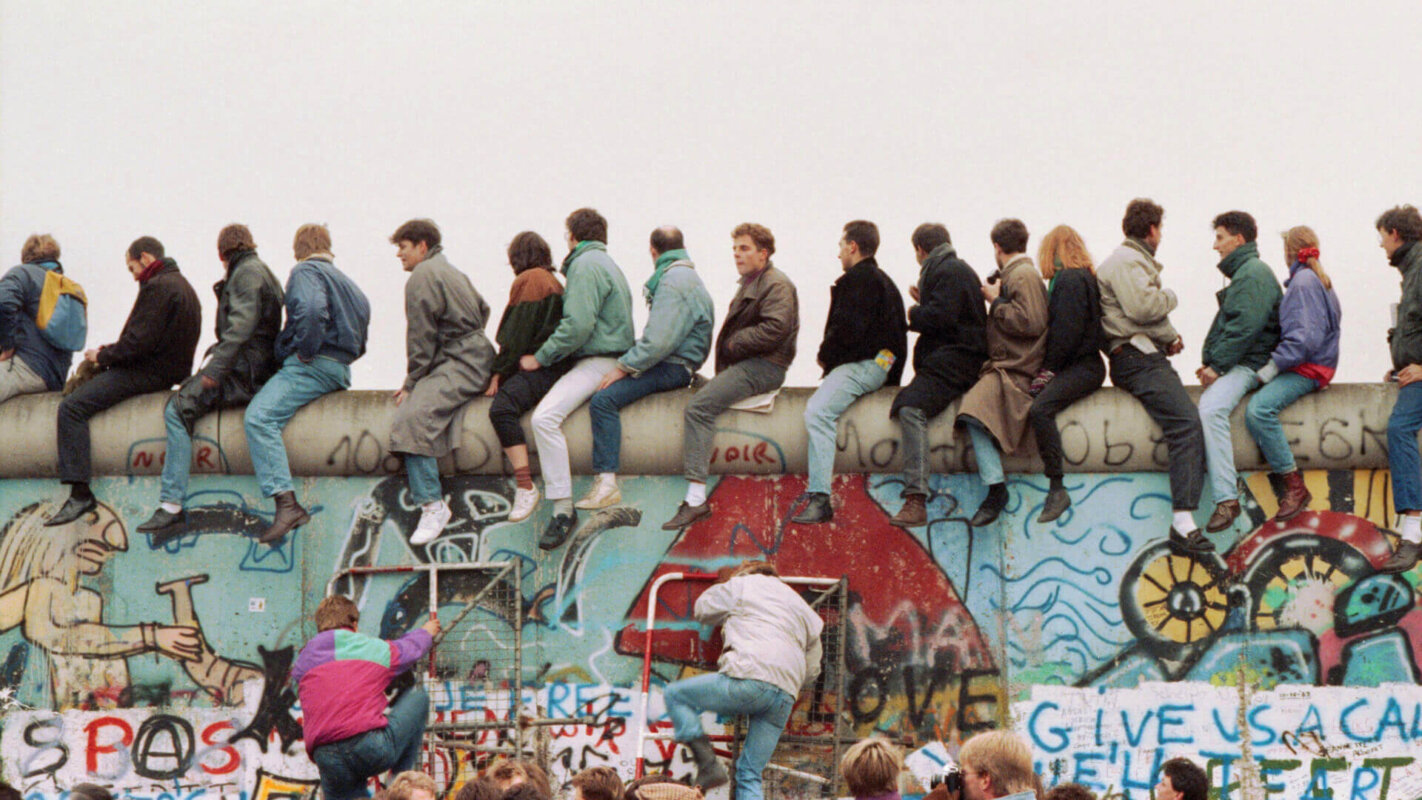
For nearly thirty years, the Berlin Wall stood as one of the most visible symbols of fear and division in the world. It was built not because people wanted separation, but because leaders were afraid of what would happen if people were free to move toward one another. Families lived within sight of each other but could not cross. Friends waved from a distance. Love was present, but access was denied. The wall did not exist because the connection was dangerous; it existed because fear was powerful.
And then in 1989, something remarkable happened. Without bombs or battles, the wall came down. People climbed over it, chipped away at it, and crossed freely. Families embraced. Neighbors reunited. What fear had built over decades collapsed almost overnight. The wall did not fall because it was suddenly unnecessary. It fell because it could no longer withstand the human longing for connection, freedom, and reunion.
That is what love does. Love breaks what fear builds. Love tears down what fear insists must remain. And long before a wall fell in Berlin, God did the same thing in Bethlehem. At Christmas, God did not reinforce the divide between heaven and earth. He crossed it. In Jesus, God stepped into our broken world and began tearing down the walls that separated us from Him and from one another.
There is a humility in love, a willingness to put someone else first. Sometimes love means taking the simple step of building that bridge as a gesture and an invitation. Sometimes it is being willing to listen and not defend. It is always being willing to choose to see someone else, not as other, but as us, equally loved by God, equally welcomed into His presence, equally drawn into and propelled out of His miraculous, divine, all-consuming love. This is God’s love. This is the gift of Christ. This is the heart of Christmas.
As we rapidly approach Christmas Day, I invite and challenge us all to rediscover Christmas by rediscovering the overwhelming, all-encompassing, all-welcoming love of God.
Where can you build bridges this coming week instead of walls?