Quick Background of Jonah
Jonah is mentioned in 2 Kings 14:25 during the reign of Jeroboam II (793-753 BC)
A well-known prophet in the Northern Kingdom
Jesus mentions Jonah as a historical figure (Matt. 12:42 & Luke 11:32)
Hosea & Amos are contemporaries of Jonah
Jonah is considered one of the Minor Prophets in the Bible
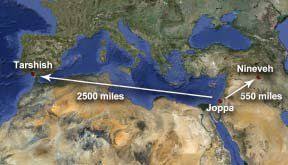
Ninenvah was the capital city of the Assyrian Empire
The theme God’s Passion for all people and Mercy for those who disobey
The book of Jonah is categorized as one of the Minor Prophets. Now when we hear that word minor, we sometimes assume it means insignificant or small or unimportant, but that is not what the label means at all. The distinction between major and minor prophets has nothing to do with importance, it has everything to do with length. And while the book of Jonah is short, the message it carries is anything but small.
In fact, Jonah himself was a major figure in Israel’s story. He was not an unknown prophet tucked away on the margins. Jonah ministered during the same general period as prophets like Amos and Hosea, and his name already carried weight among the people of Israel. Jesus Himself would later refer to Jonah’s life and story, and long before that, Jonah’s ministry was already recorded in Israel’s history.
We learn in 2 Kings 14:25 that Jonah was a recognized prophet during the reign of King Jeroboam II. He was from Gath Hepher, and he had delivered a message that Israel wanted to hear, a message that promised the expansion and restoration of the borders of the Northern Kingdom. At that time there were two kingdoms, the Northern Kingdom called Israel, made up of ten tribes, and the Southern Kingdom called Judah, made up of two tribes. Jonah’s prophecy affirmed national success, political strength, and territorial growth. He was a prophet who had spoken words that benefited his people, words that made him respected, trusted, and well known.
But there is more to this story, because Jonah’s name cannot be understood without understanding Nineveh. Nineveh was the capital city of the Assyrian Empire. Assyria was not just a rival nation, it was Israel’s enemy. It was Assyria that would eventually destroy the Northern Kingdom in 722 B.C. and nearly wipe out Judah as well. Assyria was brutal, violent, feared, and hated. Knowing that history helps us understand why the call Jonah received was not just inconvenient, it was offensive, unsettling, and deeply personal.
Jonah Is a Cautionary Tale, Not a Children’s Story
(MULTILINE)
Now let me ask you something. What is the most outrageous story you could tell, the kind of story that makes people lean in, the kind that makes a table go quiet and then explode with, no way, that didn’t really happen. Do you have a story like that, one you only tell certain people because they understand the context, or maybe one you do not tell at all because it reveals too much?
Stories are subjective. What makes a story powerful is not always the events themselves, but how they are told, the tone, the tension, the emotion. One person’s unbelievable experience is another person’s ordinary Tuesday. Some stories are funny, lighthearted, and easy to share. Others are filled with pain, loss, trauma, failure, and those stories tend to stay guarded. We choose carefully who gets to hear them, because stories shape perception.
I will be honest, there are stories in my life that I do not tell everyone. Not because I am hiding, but because they shaped me. Some came from failure. Some came from moments I wish I had handled differently. And there are experiences that, if misunderstood, would change how people see me. Those are the hardest stories to tell.
I believe that is exactly what we are about to read. The book of Jonah is not a children’s story dressed up with a fish and a miracle. It is not a summary we learned once and filed away. It is a personal account, a confession of sorts, a story shaped by obedience and resistance, by mercy given and mercy resisted. It is a cautionary tale, and at the same time a mirror, challenging us to see God rightly and to see people the way God sees them.
What is ironic is that most people think they know Jonah, but they only know the headline version. The book itself is written around a series of questions. Fourteen of them, questions that expose motives, reveal hearts, and confront assumptions. Questions asked in storms, in silence, in prayer, and in anger. Questions that demand answers not just from Jonah, but from every reader who opens the story.
And as we begin this journey, we are not just reading about a prophet. We are stepping into a story told by someone who lived it, someone who wrestled with God’s calling, God’s compassion, and God’s mercy, and discovered that God’s passion for people is far greater than our comfort, our preferences, or our prejudices.
The writer writes in such a way that 14 questions are taken in the book of Jonah, and as a reader of the book of Jonah, in God’s Word, the Bible, we must consider the questions and answer them for our own lives and relationship with our loving and merciful God, 1:6;8;10;11;2:4; 3:9; and then finally in 4:2;4;9;11.
God Spoke
Jonah 1:1-3
When was the last time you heard someone say, “The Lord told me”? Not in passing, not casually, but with weight, with certainty.
Jonah Heard God Speak and Didn’t Like What He Heard
(MULTILINE)
Obedience is Difficult When God Points Us in the Direction of People We Do Not Like
(MULTILINE)
If we are honest, this is where Jonah becomes more relatable than we like to admit. Because when God told Jonah to go to Nineveh, He was not sending him to a neutral place. He was sending him to people Jonah believed did not deserve mercy. And when the Lord speaks in a way that challenges our values, our comfort, or our sense of justice, obedience suddenly becomes complicated. Jonah did not ignore God because he did not hear Him. Jonah ran because he heard Him clearly.
God Sent
Jonah 1:4-10
Storms of Life Reveal What the Calm Waters Conceal
(MULTILINE)
Sticky Statement:
When We Take Matters Into Our Own Hands it Points to What Controls Us
God Might Shake What Where We Place Our Trust to Reveal Who We Trust
The Storm Was Not Punishment, It Was Pursuit
(MULTILINE)
God Stopped with Mercy
Jonah 1:11-15
It Takes Strength to Be Honest After Years of Dishonesty
(MULTILINE)
Sometimes the Chaos We Find Ourselves In Has to Do With the Direction We Are Rowing
(MULTILINE)
The Storms Subside When We Submit With a Pure Heart
(MULTILINE)
God Prepared with Grace
Jonah 1:16,17
As the sea settled and silence replaced chaos, the men stood stunned, trying to process what had just occurred and how a story like this could ever be retold. They had boarded the ship expecting a routine journey. Instead, they encountered the living God.
God Revealed Himself to People While Redirecting Jonah
(MULTILINE)
What needs tone applied in your life today? Not volume, not noise, not pressure, but tone. If we follow the guideposts of this story, the questions almost ask themselves. What has God spoken? What has God sent? What has God stopped? And what is God preparing?
This first chapter invites reflection through the people in the story. Some may recognize themselves in the captain, focused, driven, task-oriented, moving from point A to point B, accomplishing the mission without slowing down long enough to notice what God might be doing in the lives of the people around them.
Others may relate more to the crew. Hardworking, curious, asking questions, reacting to circumstances, but shaped more by culture than conviction. Crying out to whatever seems powerful in the moment, yet not fully grasping the authority of the Lord over every part of life.
And then there is Jonah. Perhaps the most uncomfortable mirror of all. God has spoken clearly. God has placed something on the heart. And instead of obedience, there has been movement in the opposite direction. Storms have come, obstacles have risen, disruptions have appeared, and rather than listening, there has been hiding, running, and spiritual sleep.
For some, the connection to Jonah may go even deeper. Anger toward God. Frustration over unanswered prayers. Disappointment in how life has unfolded. A quiet resentment that God did not do what was expected or hoped for. Whatever the reason, resistance has replaced trust.
This story has been preserved not to entertain, and not even just to inform, but to warn and to invite. It warns against a heart that runs from God, that holds grudges against God, that ignores His authority. And it invites us to recognize something even greater, God’s passion for people and God’s mercy toward the reluctant.
Recognize & Respond
God Spoke, Not to Condemn, But for a Calling
(MULTILINE)
God Sent a Storm, Not to Destroy, But to Redirect
(MULTILINE)
God Stopped the Ship, Not to Punish, But to Protect
(MULTILINE)
God Prepared a Miraculous Moment For a Ministry Story
(MULTILINE)
