Quick Background
Map of 7 churches in Asia Minor

Written by the Apostle John around AD 95 during the reign of the emperor Titus Flavius Domitian
The Apostle Paul mentions the church of Laodicea in his letter to the church of Colossae around AD 50
Each letter has the same format from Jesus:
Address:
Jesus introduces Himself and identifies Himself in a unique way that is connected to the cirrus location and history
Admiration:
Jesus points out an area where the church is excelling. He tells them what they are doing right.
Rebuke:
Jesus calls out an area that needs attention or correction
Command:
Jesus offered instructions, commands, and practical means of redirection for the church to respond
Promise:
Jesus extends to each church a promise that awaits their faith-filled action and endurance
Over the next seven weeks, we are going to walk through the seven letters Jesus dictated to real churches in real cities under real pressure. And here’s the tension we need to feel from the very beginning: these letters are not written to pagans. They are written to churches.
And the uncomfortable truth is this, if we’re honest, there are tendencies in these churches that look uncomfortably familiar. It may not describe every believer. It may not describe every ministry. But it often describes a segment of the church that quietly has influence throughout the church.
Six of the churches hear something affirming from Jesus. Five of them are told plainly, “You need to repent.” Two receive nothing but commendation and praise. And one, Laodicea, receives no praise at all. Not because they were immoral. Not because they were heretical. But because they were known to have water that was lukewarm.
I have traveled to a lot of places over the years, and almost everywhere I have gone, I’ve been given the same warning. Don’t drink the water. Drink bottled water. Be careful with the water. Some places even tell you to brush your teeth with bottled water because the local water will make you sick.
I’ve heard that warning on multiple continents. But I can honestly tell you, the worst water I have ever tasted in my life was not overseas. It was not in a developing nation. It was not in some remote village. It was twenty-eight miles from here.
I was around 15, riding with some friends and their dad, and we stopped at Roy’s BBQ in Chickasha. Trying to be polite, trying to be cheap, and thinking I was making a healthy choice, I ordered water. When I said it, everyone at the table looked at me—but nobody said anything. Even the waitress hesitated and asked, “Are you sure?” When I said yes, she told me she’d bring me some lemons. At that age, I had no idea why water would need lemons.
The food came. BBQ sandwiches. French fries. And a glass of water. I took one sip—and apparently my face said what my mouth didn’t. I tried again. Still terrible. That’s when the waitress smiled and said, “You aren’t from around here, are you? Our water is bad. Let me get you a Coke.”
That moment has stuck with me for years, because there is nothing quite like expecting refreshment and receiving something that makes you recoil instead. That image—bad water—is not just a childhood memory. It is the central metaphor Jesus uses when He speaks to the church in Laodicea.
Comfort Can Disguise Spiritual Drift
(MULTILINE)
Laodicea was wealthy, successful, educated, resourced, and self-sufficient. They had everything a city could want—and everything a church could mistake for health. And yet Jesus says something shocking: He is not inside the church. He is standing outside, knocking.
They Lost Their Passion
(Revelation 3:14–16)

 Image of Colossae water

Heirapolis and the healing waters
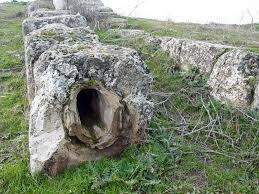
A water pipe in Laodicea
That image of bad water is exactly where Jesus begins His letter to Laodicea. Not with condemnation. Not with anger. But with a diagnosis. When Jesus speaks to this church, He does not exaggerate, and He does not speculate. He says plainly, “I know your works.” In other words, I see you. I know what you’ve built. I know what you rely on. I know what you’ve replaced Me with.
Comfort Dulls Spiritual Urgency
(MULTILINE)
This church had learned how to survive without a source. They had learned how to manage without dependence. And that is why Jesus is outside their church, highlighting their blind spot.
Spiritual Dependence is Replaced by Cultural Comforts
(MULTILINE)
The church had stopped being the church; they felt they had arrived. Instead of continuing to live for the Lord, they began to live for the comforts of the world
They Lost Their Values & Vision
(Revelation 3:17–18)
We can see where Jesus, knowing the church and the context of their city, based on the water, now gives the reason to the church He is bringing condemnation. If Jesus is going to call us out, He is going to tell us why.
Comfort Avoids Conflict at all Costs
(MULTILINE)
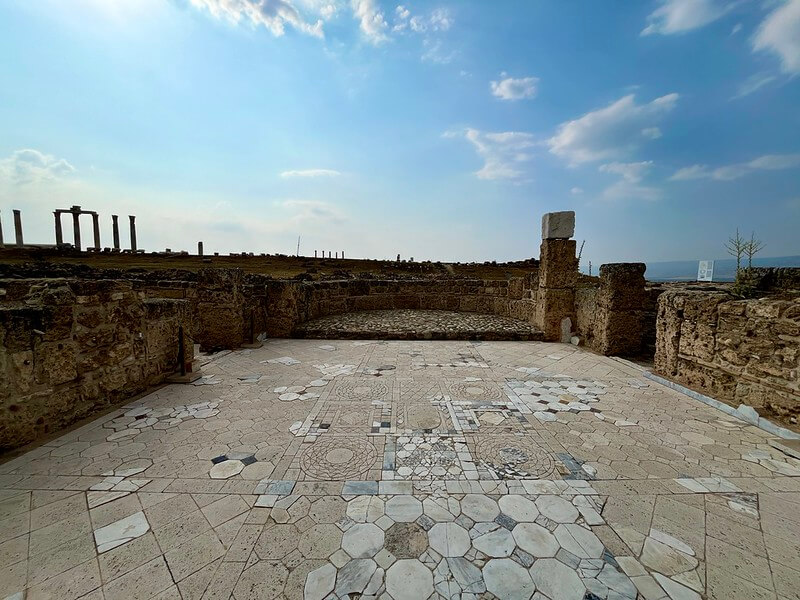
Culture Promises Comfort, Jesus Gives Presence
(MULTILINE)
They Lost Their Love
(Revelation 3:19–22)
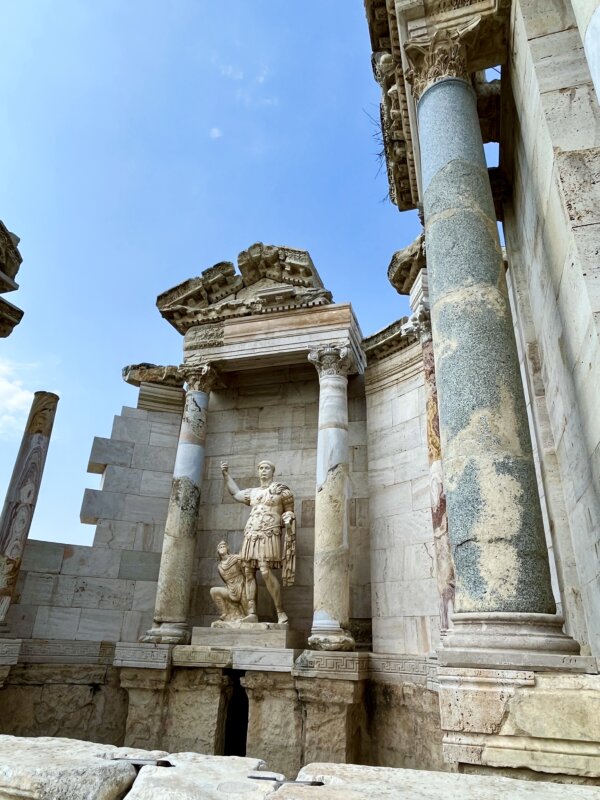
Inviting Jesus In Changes Ordinary Moments into Fellowship
(MULTILINE)
He does not barge in. He does not demand. He knocks. The word John uses for “eat” is deipneo—the main evening meal. The long meal, the unhurried meal, the relational meal. Jesus is saying, “I want to sit with you. I want to dwell with you. I want access to the most ordinary, honest, unguarded parts of your life.”
Jesus Lingers
(MULTILINE)
Jesus rebukes this church not because He has abandoned them—but because He loves them. “Those whom I love, I rebuke and discipline.” Laodicea is not a lost cause. It is a warning church. And the same Jesus who confronts complacency is still standing at the door, still knocking, still offering fellowship, not performance.
The question is not whether Jesus is near. The question is whether He has been invited in.
Reflection & Response
Have you lost your passion for the mission of Jesus Christ?
(MULTILINE)
Are the values and vision in your life different than the expectations of Jesus Christ in your life?
(MULTILINE)
Has the love of comfort replaced your love for Jesus Christ?
(MULTILINE)
Laodicea is not the story of a church Jesus gave up on. It is the story of a church Jesus pursued. He corrects them because He loves them. He confronts them because He is not finished with them. He knocks because He still desires fellowship. And His final promise is stunning. “To the one who is victorious, I will give the right to sit with Me on My throne.”
The church that thought it had everything is offered the one thing that matters most—shared life with Jesus. So as we begin this journey through the seven churches, let this truth settle in our hearts: Revelation is not written to scare the church, but to shape the church. It does not call us to speculation—but to faithfulness. And it begins with a simple, profound question we must all answer: Is Jesus comfortably inside our lives—or patiently waiting outside?

Let me bring this into our world for a moment. Imagine a city today that is known nationally for violence, corruption, and moral decay. A city that makes the news for all the wrong reasons. A place most people would label as too far gone, too hostile to God, too broken to change. Now imagine a stranger, one ordinary person, walking into that city with no platform, no following, no marketing, no protection, and no backup plan, simply delivering a message from God. And within days, not years, not generations, but days, the entire city begins to change.
Most of us would say that is unrealistic. We would say revival does not work like that anymore. We would say people are too hard-hearted, too skeptical, too divided. But Jonah 3 confronts that assumption head-on. The problem has never been the power of God’s message. The problem has always been whether people are willing to hear it and respond.
Are We Willing to Hear & Respond to Good’s Message?
(MULTILINE)
That is what makes this chapter so unsettling. Nineveh did not ask for revival. Jonah did not want revival. And yet revival came anyway. Not because conditions were favorable, but because God’s mercy was already moving. Sometimes the greatest movements of God happen in places we least expect, through people who feel the least qualified, when hearts are more fragile than they appear.
There are moments in Scripture that feel familiar, and then there are moments that feel almost unbelievable. Jonah chapter 3 falls into that second category. It sounds too clean. Too fast. Too successful. One reluctant prophet walks into one of the most violent cities in the ancient world, speaks eight words, and an entire city repents. From the streets to the palace, from the people to the king, everything changes. If we are honest, it almost sounds exaggerated. It almost feels like a story we tell in church, not something that we believe could actually happen.
And maybe that is why Jonah 3 makes us uncomfortable. We are used to slow change. We are used to resistance. We are used to arguments, explanations, and long journeys before transformation happens. But Jonah 3 confronts us with a disturbing truth. God does not need ideal conditions to bring radical change. He only needs obedient messengers and receptive hearts.
Here is the tension we feel when we read this chapter. If this kind of revival is possible, why do we see it so rarely? If one sermon could change an entire city, what does that say about our confidence in God’s Word? And if God could bring repentance to Nineveh, what does that say about the places and people we have already written off?
Revival Begins When People Take God Seriously
(MULTILINE)
Jonah did not preach with passion. He did not preach with creativity. He did not preach with enthusiasm. He preached with obedience. And sometimes obedience is more powerful than enthusiasm.
These chapters force us to wrestle with an uncomfortable question. Is the problem that God is unwilling to move, or that we are unwilling to believe He still can? Because Jonah 3 and 4 do not tell the story of a gifted preacher. It tells the story of a gracious God who responds to repentance.
Nineveh was not spiritually curious, it was spiritually corrupt. It was known for violence, oppression, and cruelty. This was not a city asking for help. This was a city marked for judgment. And yet, this is the city God sends Jonah. Not because Nineveh deserved mercy, but because God’s compassion is greater than human expectation.
Jonah chapters 3 and 4 are not about a prophet finally getting it right. It is about a city finally taking God at His word. And what happens next will challenge everything we assume about repentance, obedience, and the power of God’s grace.
God Speaks Again
Jonah 3:1-2
Scripture consistently reveals how God speaks again. From Abraham to David to Peter to Jonah, the story of redemption is filled with moments where failure did not have the final word. Most of us do not have to search very far in our own story to recognize the mercy of a second chance. We are living proof that God is not a God of one opportunity and then dismissal.
God’s Second Chances Reveal His Commitment Towards Restoration
(MULTILINE)
Maturity Obeys Immediately, Immaturity Expects Step-by-Step Instructions
(MULTILINE)
Revival Begins with a Response to God
Jonah 3:3-9

Why the Immediate Response?
A Basic Knowledge of God, But Still a Spiritual Blank Slate…Genesis 10:8-12; 1 Samuel 5:1-5
Jonah Was a Sign…Matthew 12:38-41
The People Were Confronted Through a False Belief System…Acts 14:11-18
Power in God’s Word
(MULTILINE)
God Shows Mercy
Jonah 3:10-4:4
Jonah chapter three ends with one of the most profound statements in all of Scripture. God saw what they did, how they turned from their evil way, and God relented from the disaster He had said He would bring upon them. And He did not do it.
That word relented does not mean God was outmaneuvered or persuaded against His will. It does not mean human repentance forced God’s hand. It means God responded to genuine repentance with the mercy He has been willing to give.
God Did Not Change His Nature. The People Changed Their Posture.
(MULTILINE)
Believe God’s Message…
Believe in God…
Belief Leads to Action…
Turn Away from Specific Sin
(MULTILINE)
God Prepares
Jonah 4:5-11
When We Decide to Stay Angry, We Stop Seeing God’s Work
(MULTILINE)
When Anger Settles into Our Hearts, Logic Leaves
(MULTILINE)
Jonah’s Anger Revealed He Cared About Comfort More Than Souls
(MULTILINE)
In chapter one, Jonah learned about God’s patience—that he could not outrun the presence of God. In chapter two, Jonah learned about God’s pardon—that God forgives those who cry out to Him. In chapter three, Jonah learned about God’s power, as an entire city repented and humbled itself before the Lord. But in chapter four, Jonah learned one final lesson—and it may be the most difficult of all—the lesson of God’s pity.
God cares for people who are far from Him. And God went to extraordinary lengths to reconcile us to Himself through Jesus Christ. Jonah is one of only two books in the Bible that end with a question. The other is Nahum—also sent to Nineveh. And that matters. Because some lives end with answers… and some lives end with unresolved questions. The question God asks Jonah is simple: “Should I not care?”
Jonah never answers. And that silence forces the question onto us.
The issue is not whether God is willing to show mercy. The issue is whether we are willing to rejoice in it, even when it is given to people we did not expect, even when it exposes anger we did not realize we carried, even when it disrupts our sense of fairness and control. Jonah believed in God’s power. Jonah experienced God’s grace. But Jonah struggled with God’s compassion. And if we’re honest, so do we.
God’s mercy is not in doubt. God’s grace is not limited. The question is this: Will we align our hearts with what God cares about, or cling to what merely makes us comfortable?
Recognize & Respond
We Can’t Outrun the Presence of God
(MULTILINE)
God Forgives Those Who Cry Out to Him
(MULTILINE)
God’s Power is Real
(MULTILINE)
God Cares for People Who Are Far From Him
(MULTILINE)

I want you to imagine a room for a moment. Someone is lying in a bed. It could be a hospital room. It could be a room where hospice has been called in. There is a quiet heaviness in the air. Conversations have already taken place. Some were hopeful. Some were direct. Some were unfinished.
There have been conversations asking for forgiveness. Father to son. Daughter to mother. Grandparent to grandchild. Friend to friend. There have been moments of laughter as stories were remembered and retold. Memories resurfaced. Old wounds acknowledged. Relationships revisited. And eventually the conversation turns serious. It always does.
Our Prayers to God Sound and Feel Different When We Run Out of Options
(MULTILINE)
The conversation centers around salvation. Not church membership. Not morality. But the soul. Salvation is the moment someone realizes they are not in the right relationship with God. That they have never surrendered to Jesus as Lord and King. That eternity is not theoretical anymore. It is personal.
I have had the privilege of being in those rooms. It is an honor. But there is something even more powerful. When the person who was in the bed gets to tell the story themselves later. When they say, this is what I thought. This is what I felt. This is when I cried out.
That is what we are reading in Jonah chapter two. Jonah is retelling what happened to him. Not from the deck of the ship. Not from the safety of shore. But from inside the fish. And here is the tension we all feel. Most people do not pray their most honest prayers on the mountaintop; they pray to them in the belly of the fish.
One of the most heartbreaking things I have watched over the years is this. God restores. God rescues. God answers prayers in moments of desperation. And then people walk right back into life out of rhythm with Him. Jonah did not seem bothered that he had abandoned God. What bothered Jonah was when he felt God had abandoned him. That is when he cried out. And that leads us to one of the most difficult prayers ever prayed.
God Heard
Jonah 2:1
God Sees Our Value in the Middle of the Brokenness, When We See Brokenness as Having No Value
God Responded
Jonah 2:2-9
It is important to notice that the prayer recorded in Jonah chapter two does not begin with rescue. The writer gives us a summary statement in verse two before unfolding the prayer itself. This verse captures the moment Jonah finally understands what is left to do. His own reasoning had led him here, his own logic had failed him, and now, in the darkness, his soul begins to reason rightly.
“I cried by reason of my affliction unto the LORD, and he heard me; out of the belly of hell cried I, and thou heardest my voice.” KJV
When We Stop Blaming is the Moment Honesty is Born
(MULTILINE)
Honesty Names the Problem, Repentance Abandons It
(MULTILINE)
A Heart Posture of Thanksgiving When Our Circumstances are Bleak, Reminds Us of God’s Faithfulness
(MULTILINE)
Grace is not Earned, it is Revealed When We Look to God
(MULTILINE)
When a person reaches the place where there is nowhere left to run, prayer becomes honest. Repentance becomes real. Gratitude becomes possible. And hope begins to form, not because circumstances have changed, but because God is still present. Jonah’s prayer teaches us that even in the darkest place, reason can be restored, not by self-reflection, but by turning fully and finally toward the Lord.
Jonah’s prayer does not end the story, but it does change the direction of it. Nothing around him has changed yet. He is still in the darkness. He is still confined. He is still waiting. But something inside him has shifted. For the first time since God spoke in chapter one, Jonah is no longer running. He is no longer resisting. He is no longer silent. The prayer in the darkness becomes the turning point, because God never wastes a surrendered heart. What happens next is not just about deliverance, it is about restoration and recommissioning. The God who heard Jonah in the depths is the same God who will speak again.
God Saves
Jonah 2:9,10
Jesus is Salvation
(MULTILINE)
Jonah cried out to Jehovah for salvation. We cry out to Jesus, because Jesus is Jehovah Who saves. The darkness did not have the final word. The fish did not have the final word. Salvation did.
Jonah’s prayer does not end with a change in circumstances. It ends with a change in confession. The fish is still there. The darkness is still there. But Jonah now sees clearly what he could not see before—salvation belongs to the Lord. That truth reframes everything.
Throughout history, faithful voices have returned to the story of Jonah, not because it is easy, but because it is honest. Dr. Martin Luther King Jr. once preached a sermon titled Fleeing from God, using Jonah to remind listeners that the most dangerous place is not the storm, but resistance to God’s call. King understood what Jonah learned in the darkness: we can run from responsibility, we can run from obedience, but we cannot outrun God’s grace.
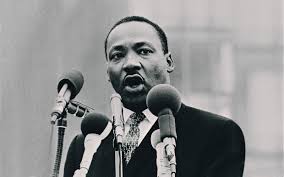
Martin Luther King Jr. often reminded listeners that hat some of the most honest prayers are not prayed from mountaintops, but from jail cells, from hospital rooms, and from places of deep struggle. Jonah would agree. His prayer was not polished, public, or proud. It was a prayer from the belly of the fish. And those are often the prayers God uses to change us most.
Some of us spend a great deal of time trying to escape the darkness instead of learning what the darkness is teaching us. We look for relief before repentance, answers before surrender, clarity before trust. But Jonah shows us that sometimes God allows the darkness not to destroy us, but to strip us of every false place of security until salvation is the only thing left to cling to.
This passage invites us to ask an honest question: What have we been trusting when things were going well? Because darkness has a way of exposing misplaced trust. It reveals whether our confidence has been in obedience, position, control, or comfort—or in God Himself.
Jonah did not pray his way out of the fish. God spoke the fish into obedience. Salvation was never Jonah’s to manage. It was God’s to give. And that same truth confronts us today. Salvation is not earned by effort, repaired by promises, or maintained by willpower. It is received. It is confessed. It belongs to the Lord.
For some, this may be the moment to stop running—not physically, but internally. To stop justifying, explaining, or defending, and instead cry out to the God who still hears from the depths. For others, this may be a reminder that even in obedience, salvation is still grace. We never graduate from dependence on God.
The great hope of this story is not that Jonah finally prayed the right words, but that God was already present in the darkness before Jonah ever spoke. And the same is true for us.
So whether you find yourself in the light today or in the depths, the confession remains the same: Salvation belongs to the Lord.
And that is enough.
Today’s Takeaways
Start with the Internal Not the External
(MULTILINE)
Prayers that are Honest, Humble, Thankful, and Hopeful Make a Difference
(MULTILINE)
Jesus is the Only Way Out of the Darkness
(MULTILINE)
Quick Background of Jonah
Jonah is mentioned in 2 Kings 14:25 during the reign of Jeroboam II (793-753 BC)
A well-known prophet in the Northern Kingdom
Jesus mentions Jonah as a historical figure (Matt. 12:42 & Luke 11:32)
Hosea & Amos are contemporaries of Jonah
Jonah is considered one of the Minor Prophets in the Bible
Ninenvah was the capital city of the Assyrian Empire
The theme God’s Passion for all people and Mercy for those who disobey
The book of Jonah is categorized as one of the Minor Prophets. Now when we hear that word minor, we sometimes assume it means insignificant or small or unimportant, but that is not what the label means at all. The distinction between major and minor prophets has nothing to do with importance, it has everything to do with length. And while the book of Jonah is short, the message it carries is anything but small.
In fact, Jonah himself was a major figure in Israel’s story. He was not an unknown prophet tucked away on the margins. Jonah ministered during the same general period as prophets like Amos and Hosea, and his name already carried weight among the people of Israel. Jesus Himself would later refer to Jonah’s life and story, and long before that, Jonah’s ministry was already recorded in Israel’s history.
We learn in 2 Kings 14:25 that Jonah was a recognized prophet during the reign of King Jeroboam II. He was from Gath Hepher, and he had delivered a message that Israel wanted to hear, a message that promised the expansion and restoration of the borders of the Northern Kingdom. At that time there were two kingdoms, the Northern Kingdom called Israel, made up of ten tribes, and the Southern Kingdom called Judah, made up of two tribes. Jonah’s prophecy affirmed national success, political strength, and territorial growth. He was a prophet who had spoken words that benefited his people, words that made him respected, trusted, and well known.
But there is more to this story, because Jonah’s name cannot be understood without understanding Nineveh. Nineveh was the capital city of the Assyrian Empire. Assyria was not just a rival nation, it was Israel’s enemy. It was Assyria that would eventually destroy the Northern Kingdom in 722 B.C. and nearly wipe out Judah as well. Assyria was brutal, violent, feared, and hated. Knowing that history helps us understand why the call Jonah received was not just inconvenient, it was offensive, unsettling, and deeply personal.
Jonah Is a Cautionary Tale, Not a Children’s Story
(MULTILINE)
Now let me ask you something. What is the most outrageous story you could tell, the kind of story that makes people lean in, the kind that makes a table go quiet and then explode with, no way, that didn’t really happen. Do you have a story like that, one you only tell certain people because they understand the context, or maybe one you do not tell at all because it reveals too much?
Stories are subjective. What makes a story powerful is not always the events themselves, but how they are told, the tone, the tension, the emotion. One person’s unbelievable experience is another person’s ordinary Tuesday. Some stories are funny, lighthearted, and easy to share. Others are filled with pain, loss, trauma, failure, and those stories tend to stay guarded. We choose carefully who gets to hear them, because stories shape perception.
I will be honest, there are stories in my life that I do not tell everyone. Not because I am hiding, but because they shaped me. Some came from failure. Some came from moments I wish I had handled differently. And there are experiences that, if misunderstood, would change how people see me. Those are the hardest stories to tell.
I believe that is exactly what we are about to read. The book of Jonah is not a children’s story dressed up with a fish and a miracle. It is not a summary we learned once and filed away. It is a personal account, a confession of sorts, a story shaped by obedience and resistance, by mercy given and mercy resisted. It is a cautionary tale, and at the same time a mirror, challenging us to see God rightly and to see people the way God sees them.
What is ironic is that most people think they know Jonah, but they only know the headline version. The book itself is written around a series of questions. Fourteen of them, questions that expose motives, reveal hearts, and confront assumptions. Questions asked in storms, in silence, in prayer, and in anger. Questions that demand answers not just from Jonah, but from every reader who opens the story.
And as we begin this journey, we are not just reading about a prophet. We are stepping into a story told by someone who lived it, someone who wrestled with God’s calling, God’s compassion, and God’s mercy, and discovered that God’s passion for people is far greater than our comfort, our preferences, or our prejudices.
The writer writes in such a way that 14 questions are taken in the book of Jonah, and as a reader of the book of Jonah, in God’s Word, the Bible, we must consider the questions and answer them for our own lives and relationship with our loving and merciful God, 1:6;8;10;11;2:4; 3:9; and then finally in 4:2;4;9;11.
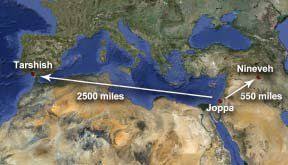
God Spoke
Jonah 1:1-3
When was the last time you heard someone say, “The Lord told me”? Not in passing, not casually, but with weight, with certainty.
Jonah Heard God Speak and Didn’t Like What He Heard
(MULTILINE)
Obedience is Difficult When God Points Us in the Direction of People We Do Not Like
(MULTILINE)
If we are honest, this is where Jonah becomes more relatable than we like to admit. Because when God told Jonah to go to Nineveh, He was not sending him to a neutral place. He was sending him to people Jonah believed did not deserve mercy. And when the Lord speaks in a way that challenges our values, our comfort, or our sense of justice, obedience suddenly becomes complicated. Jonah did not ignore God because he did not hear Him. Jonah ran because he heard Him clearly.
God Sent
Jonah 1:4-10
Storms of Life Reveal What the Calm Waters Conceal
(MULTILINE)
Sticky Statement:
When We Take Matters Into Our Own Hands it Points to What Controls Us
God Might Shake What Where We Place Our Trust to Reveal Who We Trust
The Storm Was Not Punishment, It Was Pursuit
(MULTILINE)
God Stopped with Mercy
Jonah 1:11-15
It Takes Strength to Be Honest After Years of Dishonesty
(MULTILINE)
Sometimes the Chaos We Find Ourselves In Has to Do With the Direction We Are Rowing
(MULTILINE)
The Storms Subside When We Submit With a Pure Heart
(MULTILINE)
God Prepared with Grace
Jonah 1:16,17
As the sea settled and silence replaced chaos, the men stood stunned, trying to process what had just occurred and how a story like this could ever be retold. They had boarded the ship expecting a routine journey. Instead, they encountered the living God.
God Revealed Himself to People While Redirecting Jonah
(MULTILINE)
What needs tone applied in your life today? Not volume, not noise, not pressure, but tone. If we follow the guideposts of this story, the questions almost ask themselves. What has God spoken? What has God sent? What has God stopped? And what is God preparing?
This first chapter invites reflection through the people in the story. Some may recognize themselves in the captain, focused, driven, task-oriented, moving from point A to point B, accomplishing the mission without slowing down long enough to notice what God might be doing in the lives of the people around them.
Others may relate more to the crew. Hardworking, curious, asking questions, reacting to circumstances, but shaped more by culture than conviction. Crying out to whatever seems powerful in the moment, yet not fully grasping the authority of the Lord over every part of life.
And then there is Jonah. Perhaps the most uncomfortable mirror of all. God has spoken clearly. God has placed something on the heart. And instead of obedience, there has been movement in the opposite direction. Storms have come, obstacles have risen, disruptions have appeared, and rather than listening, there has been hiding, running, and spiritual sleep.
For some, the connection to Jonah may go even deeper. Anger toward God. Frustration over unanswered prayers. Disappointment in how life has unfolded. A quiet resentment that God did not do what was expected or hoped for. Whatever the reason, resistance has replaced trust.
This story has been preserved not to entertain, and not even just to inform, but to warn and to invite. It warns against a heart that runs from God, that holds grudges against God, that ignores His authority. And it invites us to recognize something even greater, God’s passion for people and God’s mercy toward the reluctant.
Recognize & Respond
God Spoke, Not to Condemn, But for a Calling
(MULTILINE)
God Sent a Storm, Not to Destroy, But to Redirect
(MULTILINE)
God Stopped the Ship, Not to Punish, But to Protect
(MULTILINE)
God Prepared a Miraculous Moment For a Ministry Story
(MULTILINE)

Over the Christmas break, I spent more time watching television than I probably should have. There is a strange gap between the end of college football and the start of the NFL playoffs, where networks fill the air with sports most of us never watch. Somewhere between ice skating and competitive snow skiing, I landed in a strongman competition. These guys were unbelievable. Their legs looked like tree trunks, their arms like steel cables. They were not lifting hundreds of pounds; they were lifting over a thousand.
Strength Is Choosing God
(MULTILINE)
What surprised me most was not their strength, but their stories. Almost every athlete talked about a major injury, surgery, or setback. Torn muscles. Broken bones. Long rehab seasons. Even though they looked powerful, each one had faced moments where their strength failed them and had to be rebuilt.
That image stayed with me because it perfectly captures where we are as a church stepping into 2026. Strength is not the absence of weakness; it is choosing to rebuild where God. We often talk about strength as power, endurance, or resilience, but biblical strength is about dependence. It is about knowing where our strength truly comes from.
When we say our theme for 2026 is ‘Strong,’ we are not pretending that there were no challenges in 2025. We felt seasons of fatigue. We navigated decline before renewal. But what matters is this: God was faithful, and we were faithful right alongside Him.
We saw baptisms. We saw generosity surge. We saw attendance rebound. We saw discipleship deepen. We saw volunteers rise up. We saw children fill classrooms, families gather at tables, and our property used daily for ministry. None of that happened because we were impressive. It happened because God met us in our weakness and strengthened what was feeble.
That is exactly what Hebrews 12 calls us to do. Strengthen what is weak. Lift what is drooping. Make straight paths again. Not so we can say we are strong, but so that no one misses the grace of God.
As we begin this year together, the question is not whether Kingsview is strong enough. The question is whether we are willing to step forward in the strength God is already providing.
Theme for the Year: Strong Enough to Step Forward
Hebrews 12: 12- 13
Hebrews 12 drops us right into the middle of a larger story, but it is a powerful place to begin. The writer has already reminded us that Jesus is our perfect High Priest, the Pioneer of faith, the Author and Finisher of our faith. Everything leading up to this moment has been pointing our eyes back to Christ. And because we look to Jesus, we are not left to generate strength on our own. We receive strength. That is where this year begins.
Our Strength Returns When Our Focus Returns to Jesus
(MULTILINE)
Walking Through Struggles With Jesus Builds Lasting Strength
(MULTILINE)
This is how we start strong. Not by pretending we are strong already, but by choosing to step forward with the strength God supplies.
True Concern for One Another
Hebrews 12:14-15
While we know that we are to be strong, true strength is never meant to be selfish. Strength is also revealed in how we lift up those around us when they are weak. When their knees are feeble, when their arms hang down in exhaustion, our call is to stand alongside them. Sometimes that strength shows in prayer, sometimes in service, and sometimes simply in acknowledging the weight they carry. There is power in noticing someone’s struggle and offering a steady presence.
Our Family and Friends Need Our Strength
(MULTILINE)
Carry Burdens with Wisdom Instead of Ownership
(MULTILINE)
A Timeless Example
Hebrews 12:15-16
The writer of Hebrews reminds us that there is a cautionary example from Scripture that still speaks today, Esau, the eldest son, who once held the birthright and the inheritance that carried God’s blessing. Yet, in a moment of impatience and immaturity, he traded what was eternally valuable for something fleeting, a single bowl of red lentils. In that moment, his belly was satisfied, but his heart would soon be broken.
Short-term Satisfaction Drain Us of Our Strength and Can Rob Us of Eternal Blessings
(MULTILINE)
Confession and Surrender to God Restores Strength and God’s Mercy
(MULTILINE)
The warning is clear: our strength can be sapped by decisions we make in haste, and what seems small in the moment can have lasting consequences. But the good news is that, unlike Esau, we have a Savior who offers restoration, strength, and the ability to step forward wisely if we bring our choices and burdens to Him.
As we step into 2026, the question for each of us is not simply, “How can I be strong?” It is, “Where will I allow God’s strength to work in my life?” Strength is not measured by what we can carry on our own; it is measured by how we rely on Christ to carry us through challenges, and how we allow Him to work through us for others.
We have seen three key truths today from Hebrews 12:12–16. First, we are strengthened when we keep our eyes on Jesus, the Author and Finisher of our faith. Even in the difficult moments, when the path seems unclear or exhausting, His strength allows us to take each step with purpose and confidence. Second, true strength is relational—it is expressed when we carry one another’s burdens wisely, pray for one another, and offer support without absorbing the sin or negativity that belongs to someone else. And third, strength requires wisdom and vigilance. Esau’s story reminds us that short-term satisfaction can rob us of lasting blessings, but confession, surrender, and trust in God restore our strength and align us with His will.
So as we move into this new year, I want you to consider three challenges:
Identify the areas where you are relying on your own strength instead of God’s.
(MULTILINE)
Look around and see who may need your strength. Pray for them, serve them, encourage them, but leave their sins and burdens with God.
(MULTILINE)
Are there decisions—big or small—that are costing you God’s blessing? Confess, repent, and move forward with wisdom.
(MULTILINE)
Kingsview, strength is not just about muscles or accomplishments. True strength is spiritual, relational, and wise. It is the ability to walk faithfully with God, carry others with compassion, and make choices that honor Him even when it’s difficult. As we enter 2026, let us be strong in the Lord, grounded in His Word, and intentional in living out our faith.
You are not alone. You are not powerless. You have the perfect High Priest, the Spirit of God, and a community of believers walking beside you. Step forward strong, step forward confident, and step forward knowing that the Lord equips those He calls.
December 28th is a strange Sunday. It doesn’t quite feel like a beginning yet, and it doesn’t really feel like an ending either. The Christmas decorations are still up, but the excitement has faded. The calendar is almost full again, but the motivation isn’t. Most of us are standing in that awkward space between reflection and resolve—looking back at what was, while quietly wondering what’s next.
It’s interesting, because we’ve either said it ourselves or heard someone else say it: Next year will be different. I’ll start fresh in January. After the holidays… We use those phrases as placeholders for change, hoping that time itself will do the work for us. But here’s the truth we don’t like to admit: time doesn’t change us—intentionality does. Time can reveal things, but it doesn’t transform things. Only intentional, obedient steps do that.
We convince ourselves with statements like, Over time I will, or When the time is right I will, or even, This just doesn’t feel like the right season. And before we realize it, we look up and wonder why others seem to be moving forward while we feel stuck. It’s not comparison—it’s recognition. We’re recognizing how real change actually takes place. Growth isn’t accidental; it’s always intentional.
A New Calendar Won’t Fix Old Patterns
(MULTILINE)
And if we’re not careful, 2026 will look an awful lot like 2025—just with new calendars, new stressors, and the same patterns. So today isn’t about beating ourselves up, and it’s not about pretending this year was perfect either. This isn’t a guilt trip, and it’s not a victory lap. Reflection without honesty leads to nostalgia, but reflection with honesty leads to growth.
Today is about asking better questions, because the quality of our future is often determined by the quality of the questions we are willing to face. Throughout 2025, we walked through several series together—different books, different themes, different seasons—but underneath all of them was the same invitation from God. It was an invitation to trust Him more deeply, to follow Him more intentionally, and to live like this actually matters. God wasn’t just shaping sermons this year; He was shaping us.
Over the past few years, I’ve started doing a highlight reel at the end of the year—a reminder of the sermon series and the memory verses we’ve walked through together. I do this because so often we reach the end of the year and honestly wonder what we’ve been doing all along. Fifty-two weeks of sermons, deep thoughts, challenging moments, some light, some heavy—and it’s easy to forget the moments that stirred something in us. The moments that challenged us to change, to obey, to trust God in a new way. What God speaks in a moment can shape a lifetime, if we make the commitment to remember it.
I started doing this because I realized how important it is to review what has been done—not out of bragging rights, but out of spiritual awareness. Reflection helps us see patterns. It reveals growth. It exposes drift. So instead of just reviewing sermons today, I want us to review ourselves. Not with guilt, not with shame, but with honesty and with hope. Honest reflection is not condemnation; it’s preparation.
So while this morning may feel a little different, my hope is that it will be deeply impactful in the space between now and the final days of 2025. I want to guide us with nine questions—questions that will help us walk back through this year, revisit the sermon series and memory verses, and most importantly, help us step forward with clarity and momentum into 2026. Because God doesn’t waste years—and He doesn’t waste willing hearts.
“What could you prioritize in these remaining days that could give you a head start in 2026?”
Matthew 6:19-21 NKJV
What We Prioritize Reveals What We Trust
(MULTILINE)
“What is the current cost of your inaction?”
Acts 1:7-8 NKJV
The Holy Spirit was Given for Movement, Not Maintenance
(MULTILINE)
“What would a wise leader or mentor remove from your life in 2026?”
Matthew 12:36-37 NKJV
God May Be Removing What We Have Learned to Tolerate
(MULTILINE)
“Are your habits aligned with your hopes?”
Ephesians 5:1–2 NKJV
Holy Habits Create Holy Outcomes
(MULTILINE)
“Have you been moving forward, or have you become better at staying busy?”
Matthew 6:9-13 NKJV
Busyness Feels Productive Until Exhaustion Takes Over
(MULTILINE)
“If 2025 repeated five times in a row, would you be grateful or grieved?”
God Is Interested in Refining Hearts, Not Recycling Years
(MULTILINE)
“What are you holding onto that God has asked you to release?”
God Doesn’t Bless What We Refuse to Release
(MULTILINE)
“What are you anchored to when everything begins to shift?”
Luke 2:10-11 NKJV
What We Anchor Ourselves to Will Shape Our Stability
(MULTILINE)
“What single change would create the greatest ripple in 2026?”
One Area Surrendered to God Can Unlock Momentum Everywhere Else in Your Life
(MULTILINE)
As we close, I don’t want you thinking about resolutions. I want you to think about responsiveness. Because resolutions focus on what we intend to do, while responsiveness focuses on what we are willing to do. And the truth is, God has already spoken this year—through His Word, through His Spirit, through moments you couldn’t ignore and questions that wouldn’t let you off the hook. God doesn’t repeat Himself because He forgot; He repeats Himself because we haven’t responded yet.
After walking through these nine questions, the real issue isn’t clarity. It’s courage. The question is not, “What will I try in 2026?” but, “What will I finally trust God with?” What will you prioritize? What step of obedience will you stop postponing? What needs to be eliminated? Where do your habits need to align? Where have you been busy but not fruitful? What are you ready to release? What will you anchor to that never changes? And what is the one thing God keeps bringing back to the surface of your heart?
It is Not About Starting Over, It Is About Starting Stronger
(MULTILINE)
As we step into a new year, hear this clearly: you are not behind. You are not disqualified. And you are not starting from scratch. You are starting from experience. And experience, when surrendered to God, becomes wisdom. God is not asking you to relive the past—He is inviting you to redeem it.
So don’t carry 2025 into 2026 unchanged. Carry the lessons. Carry the clarity. Carry the calling. Because God is faithful to use everything you’ve walked through—if you are willing to move forward with Him. The next step doesn’t require perfection; it requires obedience.
And my prayer for you, for your family, and for our church is simple: that we wouldn’t just close out a year—we would step into a new one with faith, focus, and a renewed willingness to trust God with what matters most.
We live in a world that talks endlessly about love, sings about love, markets love, and longs for love, yet we struggle to understand the love God has for us and the love He calls us to live out toward Him and toward others. That tension sits at the very heart of Advent. The Advent season and the Christmas story do not point to a transaction, manipulation, or guilt-driven exchange, but to a gift freely given. They point to a love that surpasses our ability to fully comprehend, because God is alive, God is active, and God loved us first, despite who we are.
God Did Not Wait for Us to Be Ready for Love, He Loved Us First
(MULTILINE)
Love is what unites us with our Creator. Jesus was born so that love could be seen, touched, and embodied. In Christ, love moved from an abstract idea to a lived reality. Jesus reminds us that there is no greater love than to lay down one’s life for another, and from the manger forward, His entire life moved steadily toward that ultimate expression of love.
This past week, while driving, I heard a newer song that caught my attention, Love is a Canyon by Noah Cyrus featuring Orville Peck. It made me think about how deeply our culture is saturated with songs about love. Across generations and genres, from classic rock to modern pop, from soul and R and B to contemporary worship music, we sing about love constantly. We celebrate it, chase it, fear losing it, and ache for it. And yet, for all the language we have about love, it remains something we wrestle with deeply.
We love being loved, but we struggle to love well. We long to be valued, yet we often fail to see our own worth. We wrestle with the truth that God loved us first, even while we were broken, distant, and foolish in our decisions. And yet Scripture tells us that while we were still far from Him, God sent His Son.
This is the true definition of love. It is not merely poetry, cinema, or music. True love crosses the great divide of fear and uncertainty. It moves into places that were once ignored and people who were once dismissed. The love that draws us to the manger is a love marked by awe, wonder, joy, hope, peace, and love itself, because God took the first step. God spoke the words we could never earn. I love you first.
The love Jesus embodied in our world is fearless. It does not merely lack fear; it confronts and overcomes fear. As we continue our Advent journey today, we focus on the love that Jesus brought into our world and into our lives.
Advent means coming or arrival, and it is marked by expectation, waiting, anticipation, and longing. It is not simply an extension of Christmas, but a rediscovery of it. Advent links past, present, and future. It allows us to share in the ancient longing for the Messiah, to celebrate His birth, and to remain alert for His return. Advent looks back with gratitude and looks forward with hope. And throughout this season, we have focused on the attributes revealed in the coming of Jesus: hope, peace, joy, and today, love.
Throughout Advent, we have looked closely at individuals within the Nativity story, but today I want us to widen the lens. When we look at the whole story, we discover that the birth of Christ brings together people across every imaginable divide.
We encounter Zechariah and Elizabeth alongside Mary and Joseph, the old and the young, the promises of Israel’s past and the fulfillment of God’s future. We meet shepherds and angels, earth and heaven, the physical and the spiritual. We even see creation itself gathered at the stable. And at the center of it all is Jesus, the infant who would become a boy, a man, and the leader of a revolution rooted not in power or politics, but in love.
The cast of characters God chose for the arrival of His Son was far from expected. To many it would have seemed inappropriate, even offensive. Yet through this unlikely gathering, God revealed the nature of His love. In Christ’s birth, divisions were crossed, walls were lowered, and dignity was restored. And in doing so, God showed us what love truly looks like.
Christ Embodies Love
1 John 4:7-16
We Are Not Expected to Create Love, But to Simply Live it Out
(MULTILINE)
Our Love is Seen Not By What We Accomplish and How We Feel; But By Who We Follow
(MULTILINE)
Love Defines and Drives Us
John 13:33-35
As Followers of Jesus Love is not Optional, It is Essential
(MULTILINE)
Love is the Clearest Evidence of a Life Shaped By Jesus
(MULTILINE)
Love Defines & Drives How We Live
(MULTILINE)
Love Develops Courage in Our Lives
Matthew 5:43-44; Luke 10:30-35; 1 John 4:17-18
Fear Builds a Wall While Love Builds a Bridge
(MULTILINE)
This is why Jesus’s teaching was so radical. This is why God’s love is so disruptive. Jesus did not merely speak about love in theory. He spoke directly into systems of fear and division. He told His followers to love their enemies and to pray for those who persecuted them. That kind of love requires courage.
Love Gives Us Courage to Cross the Divide
(MULTILINE)
Jesus’s love is fearless love. It forms courage within us. It gives us the strength to cross borders, to lower defenses, and to reach toward those we would otherwise avoid. Courageous love may not begin on a global scale. It may begin in your family, in your home, in your neighborhood, or in your workplace. At Christmas and always, Jesus calls us into His loving presence and invites us to make room for others, not because they deserve it, but because love always goes first.
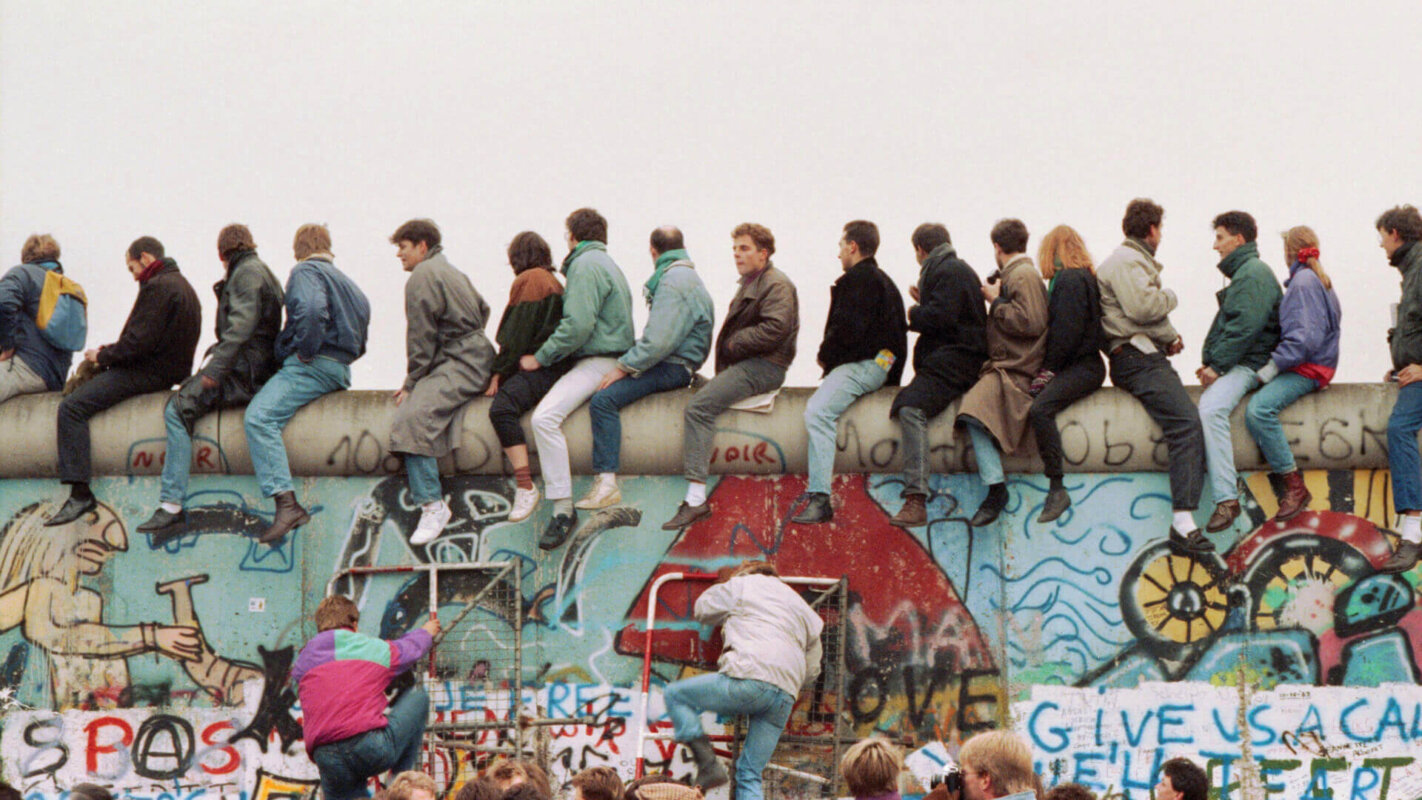
For nearly thirty years, the Berlin Wall stood as one of the most visible symbols of fear and division in the world. It was built not because people wanted separation, but because leaders were afraid of what would happen if people were free to move toward one another. Families lived within sight of each other but could not cross. Friends waved from a distance. Love was present, but access was denied. The wall did not exist because the connection was dangerous; it existed because fear was powerful.
And then in 1989, something remarkable happened. Without bombs or battles, the wall came down. People climbed over it, chipped away at it, and crossed freely. Families embraced. Neighbors reunited. What fear had built over decades collapsed almost overnight. The wall did not fall because it was suddenly unnecessary. It fell because it could no longer withstand the human longing for connection, freedom, and reunion.
That is what love does. Love breaks what fear builds. Love tears down what fear insists must remain. And long before a wall fell in Berlin, God did the same thing in Bethlehem. At Christmas, God did not reinforce the divide between heaven and earth. He crossed it. In Jesus, God stepped into our broken world and began tearing down the walls that separated us from Him and from one another.
There is a humility in love, a willingness to put someone else first. Sometimes love means taking the simple step of building that bridge as a gesture and an invitation. Sometimes it is being willing to listen and not defend. It is always being willing to choose to see someone else, not as other, but as us, equally loved by God, equally welcomed into His presence, equally drawn into and propelled out of His miraculous, divine, all-consuming love. This is God’s love. This is the gift of Christ. This is the heart of Christmas.
As we rapidly approach Christmas Day, I invite and challenge us all to rediscover Christmas by rediscovering the overwhelming, all-encompassing, all-welcoming love of God.
Where can you build bridges this coming week instead of walls?

When we were younger, or maybe even now, did you ever want to be picked first? It’s funny how being chosen can stir both joy and dread. I can still remember standing on the schoolyard playground, waiting for teams to be chosen. There was a certain thrill when your friends were picked with you, and there was relief if you weren’t the last one standing there alone. But at its core, being chosen brought a sense of joy. Someone wanted you. Someone saw you.
Luke’s Gospel opens with that kind of moment. God chooses to step into human history, and He begins by sending Gabriel with messages that would change everything. Gabriel is sent to Zechariah. Gabriel is sent to Mary. These announcements were the first signs that God was about to unleash His joy into the world.
And I imagine heaven was buzzing with excitement. Angels don’t get jealous, but I can picture an eagerness among them, a holy anticipation, to take part in what God was doing. When the angelic army lit up the night sky for the shepherds, Scripture says they praised God with joy. Heaven erupts when God is fulfilling His promises. Joy is heaven’s natural response.
And God did all of this because He has a place for each of us. He sent His Son so we could have joy, not a thin, seasonal feeling, but the deep, soul-steadying joy of forgiveness, redemption, and relationship with Him. That alone should awaken something in us. It should stir the kind of joy that rises before we can fully explain it.
When Christ is Our Source, Joy is Steady, Not Seasonal
(MULTILINE)
But if we’re honest, during the Christmas season, it doesn’t always feel that way. Sometimes joy seems like the thing that gets picked last. We talk about joy, we sing about joy, we decorate with the word joy, but we don’t always feel joy. The planning, the pressure, the travel, the spending, the expectations, can all chip away at the joy we’re supposed to be celebrating. Many of us have whispered to a spouse or coworker, “I’m ready for all this to be over.” We’re worn out. Drained. Joy feels misplaced or overlooked.
And yet joy can be rediscovered, sometimes in the most unexpected ways. It reminds me of Yellowstone National Park, one of the most unique and breathtaking places on earth. Yellowstone sits on top of a massive supervolcano. Beneath the surface, heat and pressure are constantly building, rising, pushing through cracks in the earth. That pressure creates geysers, Old Faithful shooting water 180 feet into the air, the Grand Prismatic glowing with brilliant color, mudpots bubbling and burping like thick oatmeal. No matter what shape they take, these geysers reveal the same truth: something powerful is happening underneath, and eventually it erupts to the surface.
Joy is like that. True joy has a source that runs deep within us, deeper than circumstances, deeper than feelings, deeper than the messiness of life. Sometimes joy bursts out of us like Old Faithful. Other times it bubbles up quietly like a mudpot. Sometimes it is loud and contagious. Other times it is still and peaceful. But real joy, God-given joy, always finds a way to rise up and reveal itself.
Some of the most joyful moments in our lives were not loud at all. They were the quiet moments of breakthrough, the silent tears of gratitude, the simple realization that God was with us. Joy is felt. Joy is seen. Joy is heard. Joy reminds us that something sacred is happening inside our hearts.
And that is why the Advent season is so meaningful. Advent is the season of “coming”, a season of waiting, longing, and anticipating the Savior. During Advent we look back and celebrate the coming of Jesus, and we look forward with hope to His return. It’s a season that stretches from the manger to the future kingdom. We wait actively, expectantly, joyfully. And today, on this third Sunday of Advent, we focus on joy, the joy that Christ brings, the joy that Christ is, and the joy that Christ awakens within us.
Because Christ has come to be God With Us, we can experience joy no matter what discouragement we are facing, and no matter what circumstances surround us.
Gabriel Announces Joy in the Waiting
Luke 1:5–14
When Luke opens the story of Jesus’ birth, he doesn’t begin with Mary. He begins with a couple who had been waiting for joy for a very long time, Zechariah and Elizabeth. Their story is not flashy. It is not loud. It is not filled with sudden eruptions of excitement. It is the story of two faithful people who had lived with disappointment for decades.
Luke tells us they were righteous before God, walking blamelessly in all His commands. They were the kind of people who we would consider true believers, steady, dependable, prayerful, consistent. And yet, despite their faithfulness, they carried a deep ache. They had no children. Their prayers for a child seemed to have gone unanswered. Joy felt like something that belonged to someone else.
Joy Erupts When Heaven Breaks into our Waiting
(MULTILINE)
Joy is Recognizing God’s Silence is Never God’s Absence
(MULTILINE)
The joy of Christmas begins right there. It begins with a God who steps into the silence, into the waiting, into the long years of longing, and speaks joy into places that feel ignored. Before Mary ever hears her announcement, before shepherds see angels in the sky, before a manger ever glows under the Bethlehem stars, joy is announced in the waiting place. Joy comes first to the weary. Joy comes first to the faithful. Joy comes first to the ones who think they’ve been forgotten.
Because joy is not about circumstances. Joy is about God’s presence breaking in. And when God breaks in, everything changes.
Gabriel Announces an Unexpected Joy
Luke 1:26–33
If Zechariah and Elizabeth show us that joy can rise slowly in the long waiting, Mary shows us that joy can break in suddenly, unexpectedly, and in ways that completely disrupt our plans.
Six months after Gabriel appeared to Zechariah in the temple, he is sent again, this time not to a priest, and not to the holy city of Jerusalem. Instead, he is sent to a small, quiet, overlooked village called Nazareth. Nothing important ever happened in Nazareth. No prophet came from there. No scholar taught there. No one expected anything significant to rise from such an insignificant place. But that is where God sends Gabriel.
God Brings World-Changing Joy to Unexpected Places and Unexpected People
(MULTILINE)
Mary, understandably, asks the practical question: “How can this be?” And Gabriel explains what only Heaven could explain: the Holy Spirit will overshadow her; this child will be holy, the very Son of God. And then comes the line that anchors this moment with the weight of eternity:
“For nothing will be impossible with God.”
Mary’s Joy Began with Surrender, Not Certainty
(MULTILINE)
Mary’s life is about to change in ways she never imagined. Her reputation, her relationships, her plans, her future—everything will shift. But Mary does not run from this joy. She receives it. She embraces it. She bows her will to God’s will and says, “Behold, I am the servant of the Lord; let it be to me according to your word.”
God’s joy doesn’t simply decorate our lives; it redirects them. And the greatest joys of our lives often begin in the moments that surprise us the most.
Joy in the waiting (Zechariah).
Joy in the unexpected (Mary).
When Jesus enters the story, joy always follows.
Elizabeth & Mary Experience Joy in Community
Luke 1:39–45
This is why the very next thing Mary does is hurry to the hill country of Judea. She goes to Elizabeth. Why? Because joy needs a witness. Joy needs someone who “gets it.” Joy needs community.
What Mary is carrying is holy. But what Mary is carrying is heavy. And she needs someone whose faith has been awakened by the same God who awakened hers. The moment Mary walks into Elizabeth’s home, joy erupts.
Sometimes We Need a Witness Before Joy Can Become a Song of Celebration
(MULTILINE)
Mary didn’t have to explain anything. She didn’t have to defend herself. She didn’t have to convince Elizabeth of anything. All she did was say hello, and Heaven did the rest.
Joy Multiplies in Community, and is Silenced in Isolation
(MULTILINE)
It’s no wonder Mary breaks into her famous song of praise just a few verses later. Joy that is shared becomes worship. Joy that is affirmed becomes confidence. Joy that is understood becomes courage.
Make the Commitment To…
To Be OK With Being Joyful
(MULTILINE)
Joy is Your Strength
(MULTILINE)
Choose Joy
(MULTILINE)
As we close this third week of Advent, remember this: the joy of Christmas is not just a seasonal decoration, a fleeting feeling, or a social expectation. The joy of Christmas is a gift from God, planted deep within our hearts, waiting to rise.
It began in the faithful waiting of Zechariah, in the courageous surrender of Mary, and in the shared delight of Elizabeth. And it continues in you today.
So wherever you are, whether your heart feels heavy or light, choose to return to the source. Choose to rejoice. Choose to let God’s joy bubble up, fill your spirit, and overflow into the lives of those around you.
A Savior has been born, the Messiah, the Lord. Let that truth anchor your heart, fuel your strength, and bring a joy that cannot be stolen, no matter the circumstances.
Let us go and live in that joy this Christmas.
I think most of you know this about me, but if you don’t, I really enjoy traveling. I’m not exactly sure where the travel bug first came from, but at this point, I’ve been to almost all 50 states, and I’m pretty confident I’ll knock out the rest in the next few years. We usually travel around Thanksgiving, but not often at Christmas. A lot of that has to do with careers, age, and family rhythms. None of that is bad — it just shapes and, in some ways, limits what we’re able to do.
But I’ve always imagined what it would be like to experience Christmas somewhere else. For example, I would love to spend an entire Christmas season in New York City. I’ve tried to convince my family to go skiing during Christmas — to get snowed in, drink hot chocolate, and open just a few simple gifts together. Not a rushed, chaotic Christmas, but one that, when my family looks back on it, they would say, “That was peaceful.”
I also love the idea of traveling overseas. I would love to experience Christmas in Germany and walk through villages transformed into tiny Christmas wonderlands. One of the goals on my life list is to see the Northern Lights, and how incredible would it be to spend the Christmas season under God’s own light display, instead of just driving around the neighborhood looking at decorated houses?
Some of those dreams may become reality one day, and some of them may not. I truly don’t know what the future holds. But what I do know is this: even the thought of those moments brings a certain joy to my heart. And tied to that joy is something just as powerful, a sense of peace.
This week, I was reading about different Christmas traditions around the world, and I came across one of the oldest Christmas traditions still practiced today. Christmas is taken very seriously in Finland, and every year, in the city of Turku, there is something called the “Declaration of Christmas Peace.”This tradition has taken place almost every year since the 1300s, for over 700 years.
Each year at noon on Christmas Eve, a city official steps onto a balcony in the Old Great Square and reads this declaration over the people. It is broadcast on television, radio, and now streamed over the internet. The purpose is simple but profound: to remind people that Christmas peace has begun, to urge them to live in harmony, and to call them to quietness and goodwill toward one another.
Part of that declaration reads:
“Tomorrow, God willing, is the gracious celebration of the birth of our Lord and Savior; and thus is declared a peaceful Christmas time to all, by advising devotion and quiet and peaceful behavior…”
What a powerful way to usher in Christmas, with a reminder of the birth of Christ and the peace His coming was meant to bring into the world. And yet, if we’re honest, that stands in sharp contrast to the world that we’re living in right now.
Christmas Can Become a Point of Conflict
(MULTILINE)
Even this week, as I was driving and listening to the radio, I heard complaints about Christmas decorations and arguments over whether or not certain places should even say the words “Merry Christmas.” Events are being banned in some American cities. Christmas displays, nativity scenes, and public celebrations are being challenged or removed.
Think about the irony of that for a moment. The Prince of Peace has become a point of conflict. The One who came to bring peace to the human heart now stirs debate, division, and tension in our culture. Just as we discussed last week, it feels like there is more hopelessness than hope… more unrest than peace. And that is exactly why the season of Advent is so important for us as believers.
Advent is More Than a Countdown to Christmas; It’s a Recalibration of the Heart
(MULTILINE)
Advent is the invitation to pause. To re-center. To recalibrate our hearts, not according to what society is saying, but according to what Christ is doing in us.
The word “Advent” literally means “coming” or “arrival.” It is a season marked by expectation, waiting, anticipation, and longing. Advent is not just an extension of Christmas—it is a holy space that connects the past, the present, and the future.
It allows us to look back and celebrate the first coming of Jesus…to recognize His presence with us here and now…and to look forward in eager anticipation to the day when He will come again.
During Advent, we practice a hopeful kind of waiting — not a passive, empty waiting, but an active and assured one. Each week in this series, we are focusing on one key attribute revealed through the coming of Christ: hope, peace, joy, and love. And today, together, we are going to rediscover peace.
Not the kind of peace the world promises. Not the kind that depends on quiet schedules or perfect circumstances. But the kind of peace that began in a manger…
and continues to live in the hearts of God’s people.
Luke 2:8-20
This morning, we are going to step into the fields with the shepherds found in Luke’s account of the Christmas story. I find it both humorous and ironic that if you’ve ever watched or been part of a Christmas play, the shepherds are usually the last ones chosen for a speaking role. They are often the ones who forget their lines, wander off stage, or cause confusion and chaos in the background.
And yet, on the holiest night in human history, it was those shepherds, not kings, not priests, not scholars, not rulers, but shepherds, of whom peace was first announced.
There is so much packed into these few verses. What we are witnessing here is nothing less than God’s birth announcement to the world. And what makes it so powerful is not just what happened, but how it happened.
This was not a royal announcement made in a palace. This was not declared in the temple. This was not delivered to the religious elite. It happened on a dark, ordinary night in the countryside outside of Bethlehem. Suddenly, an angel of the Lord appears, light piercing the darkness, and then, just as suddenly, the sky is filled with what the New Living Translation calls “the armies of heaven.” Try to picture that for a moment: an entire heavenly host filling the night sky. Magnificent. Bright. Terrifying. Glorious. And then there is the sound.
Heaven is praising God. Declaring His glory. Announcing peace. What language were they speaking? What melody were they singing? Was it thunderous or gentle? Could anyone else besides the shepherds hear it?
The message itself is stunning: “Glory to God in the highest, and on earth peace to those on whom his favor rests.” You would think that a message like that, the announcement of the long-awaited Messiah, would be delivered to the most important people on earth. The rich. The famous. The powerful. The influential. But not in God’s kingdom.
Instead, the message of peace is entrusted to ordinary men, working the night shift, watching over sheep. Average. Unknown. Overlooked. And here is one of the great truths of Christmas: God’s peace does not follow human rankings. It flows through humble hearts.
Peace Is the Presence of God Within the Chaos of Life
Peace Shows Up in the Chaos, Not After it Passes
(MULTILINE)
Christ Was Born into Chaos so that We Could Find Calm in Him
(MULTILINE)
Peace in the Middle of the Mess
God Meets Us Where Life is Hardest, Not Where Life is Easiest
(MULTILINE)
Let me encourage you that there is a deeper peace, there is a peace that defies our circumstances. No, in the face of all you are feeling and all you have gone through, God’s peace just doesn’t make sense, but it is real. And it is healing. And it can guard your heart from continuing wounds. And it can protect your mind from the onslaught of anxiety.
The apostle Paul describes the process like this:
Rejoice in the Lord always. I will say it again: Rejoice! Let your gentleness be evident to all. The Lord is near. Do not be anxious about anything, but in every situation, by prayer and petition, with thanksgiving, present your requests to God. And the peace of God, which transcends all understanding, will guard your hearts and your minds in Christ Jesus.
Philippians 4:4-7, NIV
Prayers of Peace are Not Meant to Change God’s Mind, But Instead to Change Our Perspective
(MULTILINE)
Peace In Christ
Biblical Peace is not the Absence of Pain; It is the Presence of God’s Restoring Power
(MULTILINE)
Peace is not Based on Who We Are. It is Based on Who Christ Is
(MULTILINE)
This angelic announcement to the shepherds becomes a living reminder to us that God’s peace is not for the perfect… it is for the broken. It is not for the powerful… it is for the surrendered. It is not for the self-sufficient… it is for those who know they need a Savior. Peace is not found in a location. Peace is not found in a season. Peace is found in a Person. And His name is Jesus.
So, as we have heard the shepherds’ story, we begin to see more than a beautiful nativity scene. We begin to see a pattern. A message. A pathway. The shepherds don’t just receive peace. They respond to peace. They run toward peace. They carry peace. The shepherd found peace that night in the presence of Christ, just as we too, can find shalom, peace, ease, a yoke that is lighter than the burdens we carry in the Prince of Peace, whose name is Jesus.
As we reflect on the shepherds and the peace they discovered that night, it’s easy to admire their story from a distance. But the truth is, this story isn’t just history. It’s a mirror for us today. The chaos we face, the messes we navigate, the uncertainty we wrestle with—they are not obstacles to peace. They are the very context in which peace comes alive. And the amazing part? That peace is not something abstract or distant. It is personal. It is present. It is Christ Himself.
Today I Commit To…
Invite Jesus into Your Chaos
(MULTILINE)
Acknowledge His Presence in Your Mess
(MULTILINE)
Anchor Your Life to Jesus & ReDiscover Peace
(MULTILINE)
So, what does that look like for us, here and now? How do we take the truths we’ve seen in the fields outside Bethlehem and bring them into our homes, our hearts, and our lives this Christmas
You and I have a choice this Christmas. We can let the stress, the conflict, the expectations, and the pressure dominate our hearts—or we can step into the reality of God’s peace that breaks through all of that. Peace is not found by rearranging schedules or decorating perfectly or forcing calm. Peace is found by turning to the One who has already entered the chaos.
So this Christmas, let us make a conscious choice. Let us pause. Let us invite God’s presence into the chaos. Let us acknowledge His power in the mess. Let us anchor ourselves in Christ. Let us rediscover the peace that was born in a manger, announced to ordinary people, and given to all who will receive it.
Take a moment right now—wherever you are—to simply say: “Lord, I need Your peace. I cannot find it on my own. I receive it from You. Come into my chaos. Come into my mess. Come into my heart. Let me know Your peace this Christmas.”
And as we do, we will remember this profound truth: Christmas is not about the absence of struggle. Christmas is about the presence of God. And in that presence, we find peace.
Where were you when? Every generation has its own “where were you when” moment. Where were you when Neil Armstrong stepped onto the moon? Where were you when you heard that JFK or Martin Luther King Jr had been shot? Where were you when news of Columbine reached you? Where were you on the morning of September 11? We remember these moments because they anchor us in time. They remind us how fragile the world can feel.
Moments like these are seismic. They shake the ground beneath us and remind us how quickly life can change. They interrupt the familiar patterns of our days and mark us forever. And as we know too well, many of the moments that shape us are not beautiful or life-giving. They are unexpected and tragic, and they introduce a new sense of uncertainty into our world.
We have heard phrases like, this is the new normal, and what is the point. And when life feels unstable, we often grasp for explanations, any explanations. We have felt the pull of conspiracy theories, and we have watched ourselves go further down the rabbit holes than we ever thought we would. At first, it feels like curiosity, something to distract the mind for a moment, but then, before long, we can explain the entire thing to someone else. We become the ones spreading it.
What a year it has been. We know the list. We have all lived it. Political assassination attempts, economic recession, mass unemployment, political division, cultural upheaval, racial reckoning, record wildfires, government shutdowns, airport confusion, mighty hurricanes, and devastating floods. It feels endless.
The past few years have brought us a new phrase that has made its way into our vocabulary the phrase doom scrolling. Say it, and everyone knows exactly what it means. It is that endless scroll through the headlines on your phone, moving from one dark story to the next. We have all done it. And if we are honest, we have all had to learn to put the phone down, especially before bed, because it can pull the soul into despair if we let it. This is the soil where hopelessness grows unless something stronger is planted. Can you feel the weight, can you feel it?
When the World Feels Unstable, Hope in Christ Holds Us
(MULTILINE)
This has become our tendency. Without even realizing it, we have spoken more about the hopelessness of our world than the hope that is ours in Christ. It is not intentional, but it has become the expectation rather than the exception. Yet hope is real, and it is the hope of Jesus returning that brings Advent into our view this morning.
I am not trying to bring us down. I am trying to name the reality we have all been living in. And if there has ever been a year when we need Christmas, this is it. If there has ever been a year when we need the hope of Christmas, this is it. If ever there was a time in our lives to rediscover the hope that is found in Jesus Christ and the hope of His return, this is that time. The world is constantly shifting and unstable, and this is the power and draw for our souls to celebrate Advent.
So what is Advent? Many have never heard the word or wondered why a church would talk about Advent Sunday after Sunday. Why do we light candles? Why do we take these weeks to focus on something older than our traditions? When we are discussing Advent, we aren’t talking about candles and calendars. We are talking about Hope. Advent is a season of hope. Advent is all about hope.
Advent Points to the Hope in Jesus Christ
(MULTILINE)
The word Advent means coming or arrival. It is a season built around expectation, waiting, anticipation, and longing. Advent is not just an early Christmas conversation or church thing. It is a sacred space that links the past, the present, and the future. It invites us to stand with the people of old who longed for the Messiah. It invites us to celebrate His birth. And it calls us to stay alert and awake for His second coming.
Advent looks back in celebration at the hope fulfilled in the arrival of Jesus, and at the same time, it looks forward in eager and confident anticipation to the day when He will return for His people. Advent teaches us how to wait. And we all know that waiting is not our strongest attribute. It is an active waiting, an assured waiting, a hopeful waiting.
Yet if we are honest, our Christmases have often become frantic and overloaded. Stores push Christmas decor and merchandise before we even reach November. Our schedules stack up with events and demands. The season that is meant to be peaceful quickly becomes stressful.
Advent pushes all of that aside. Advent prepares the heart. It invites us into a story far greater than our own, the story of God’s redeeming love for the world. Advent does not ask us to pretend that we have no pain or to cover up the hardships of the past year. It invites us to meet God in them. It calls us to dig deeper into the truth that He sent His Son to be Immanuel, God With Us. Advent is a season of preparation. It is a time to align ourselves with the presence of God, rather than the pressure of the present.
So wherever you are in your anxiety and uncertainty, wherever you are in your spiritual journey, I invite you into this season of Advent. I believe that in the craziness and confusion of this year, God has handed us a gift. He has invited us to rediscover Christmas.
For the next four weeks, we will explore the attributes of Christmas revealed in the birth of Jesus and in this season: hope, peace, joy, and love. Then on the evening of December 21, we will gather for a candlelight and communion service, and I hope you will plan to be there. Today, we begin by rediscovering the hope of Christmas, even while we stand in the middle of uncertainty.
How Long?
Luke 2:25-26; 36-37
Hope Grows in the Waiting
(MULTILINE)
God’s Deepest Work is Done in Spaces We Call Delays
(MULTILINE)
Hope Sees Beyond
Luke 2:27-35
Hope Sees What Our Eyes Cannot
(MULTILINE)
For in this hope we were saved. But hope that is seen is no hope at all. Who hopes for what they already have? But if we hope for what we do not yet have, we wait for it patiently. In the same way, the Spirit helps us in our weakness.
Romans 8:24-26, NIV
Hope Does Not Deny Reality, It Looks Beyond
(MULTILINE)
God is with Us
Luke 2:38
God is not Distant, Our Hope is We See His Presence in Our Dark Hours
(MULTILINE)
“For I know the plans I have for you,” declares the LORD, “plans to prosper you and not to harm you, plans to give you hope and a future.” (Jeremiah 29:11)
“Do not fear, for I have redeemed you; I have summoned you by name; you are mine. When you pass through the waters, I will be with you; and when you pass through the rivers, they will not sweep over you. When you walk through the fire, you will not be burned; the flames will not set you ablaze.” (Isaiah 43:1-2)
“Be strong and courageous. Do not be afraid; do not be discouraged, for the LORD your God will be with you wherever you go.” (Joshua 1:9)
Hope Inspires Us To Carry On
Romans 5:1-5
Hope in God Doesn’t Disappoint; Instead, it is Developed into Our Character
(MULTILINE)
One Step in Hope Carries Us Further Than a Lifetime of Despair Ever Could
(MULTILINE)
What is your next step of hope today? What is the next step of hope in this Advent season? What is the step you have convinced yourself is too hard to take, the one that keeps you from living fully with Jesus, from walking in hope, from living free from the burdens that weigh you down?
Advent is Not A Season of Waiting; It Is a Season of Preparing
(MULTILINE)
As humans, we want to know what tomorrow holds. We want to see the end of the story. We want to skip ahead to the resolution. But life does not work that way. It is not a privilege we have been given. Yet in Christ, we have been given the end of the ultimate story. In Him, we know that true life transcends the pain and brokenness of this present world.
In this Advent season, we can anchor our hearts in hope. We can find hope in the arrival of Jesus. We can find hope in God’s faithfulness to fulfill His long-awaited promise of the Messiah. We can find hope in His Spirit, who works in and around us, strengthening us, guiding us, and giving us the courage to take the next step even before we see the whole path. One step at a time, we move forward, carried by His presence.
I invite you to take a step toward hope today. Hope is dawning. Christ is coming. He is returning again. Let us welcome Him into our hearts and lives each day of this season of expectation.
Simeon and Anna were more than sparks of hope in Israel. They were torches of hope. They lived with expectancy. They believed God would fulfill His promise. They waited for the Messiah, and they were ready. These two elders had experienced hardship and loss, seen suffering and injustice, and yet they remained faithfully devoted to God. Anna had been a widow for decades, a position of low status in her culture. Simeon had waited his entire life for the promise of the Messiah. And still, when the day came, neither was surprised nor uncertain about the identity of this child.
Almost everyone else in the Christmas story needed convincing. Angels startled them. Heavenly announcements overwhelmed them. Simeon and Anna were different. They were ready. They were tuned in. They were watching, listening, expecting. Their hope prepared them. Their hope made them capable of recognizing the fulfillment of God’s promise when it finally arrived.
This is the invitation for you today. Take the next step of hope. Be attentive. Be ready. Watch, listen, and expect the work of God in your life. Advent is not merely a season of waiting; it is a season of preparing. And hope is what prepares us.